Software Testing and Development Blog Posts
Subscribe to the full blog feed using RSS
Subscribe to the full blog feed using RSS
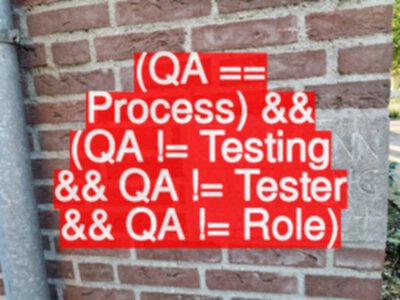
TLDR; Quality Assurance is a process. It is not a role. Roles have responsibilities, and we all have a responsibility for quality. People don’t DO quality.
Security Testing is a highly technical set of skills, covering a wide domain of knowledge that can take a long time to learn and gain proficiency. But there are simple ways to increase the scope of what we already do to provide more insight into the security of our application.
TLDR; If you are lucky enough to already be working in testing, and want to learn to automate, then I recommend gradually automating to add value in your existing work. Focus on a few tools and approaches that add value to you. Then build on that.

TLDR; JUnit is an execution framework. The principles of TDD are about writing code, seeing it fail, writing code to make it pass, seeing it pass and making it better. All applies when writing automated execution code for Testing
TLDR; Do you test with individuality? Do you release work that reveals and harnesses your creativity? You can. Take heart from people like Stafford Beer, Charles Dodgson, Buckminster Fuller, William Blake and more. “I will not Reason & Compare: my business is to Create”

TLDR; People seem to be nervous about releasing code to Github in case it isn’t good enough, or it reflects badly on them. I release code that I created that I found useful. Over time it leaves a trail of code that builds into a portfolio. If I judged it, I would leave no trail. Release. Build a portfolio.

Sometimes we ask for something, without really understanding what that means. Asking for collaboration opens more options.

Updated 2023/07/30 to include talk recording
The Open Quality Conference was an online conference based around Open Sourced Tooling.
The videos were pre-recorded with some live sessions during the day.
This recording was released free to Patreon supporters in 2020 And can be found on Patreon and as part of the Patreon Exclusive “Get Your Message Out - blogging” course
In this talk we will provide examples of using Github, Netlify, Hugo, Heroku, GitPages, Gist and a host of other sites and tools to share your knowledge, and expand your skillset and experience as you do so. You don’t have to share code to take advantage of the open source hosting. You don’t need to be able to code to do this.

TLDR: Code Coverage can help with code review when we focus the coverage metrics on the code we want to review and format it to support coverage metric analysis.

In this podcast I discuss a UK government guidance document on exploratory testing.