Software Testing and Development Blog Posts
Subscribe to the full blog feed using RSS
Subscribe to the full blog feed using RSS
This workshop is available as an online course on Patreon
Audit, Explore and expand your ability to Test and Automate applications.
Testability is different from Test Ability is different from Automatability. In this workshop we explore all of this with hands on examples.
Ability is one of the key attributes that elevates your testing proficiency. In this workshop we will evaluate ability from a number of different perspectives:
TLDR; Notes on Shift Left, where I try to explain why I don’t use the term and what I use instead. Evolve, Grow and Improve rather than Shift and Move
For some reason I’ve had a few emails and linkedin questions asking me what I think about “Shift Left”. I thought I’d put out a public answer.
I’ll start with - I do not use the term “Shift Left” because:
Instead I think of supporting the growth and evolution of a System over its lifetime and I don’t need “Shift Left” to do that.
I was tidying up some old papers and found an article I had forgotten I had written. “The Question: Are there any Software Testing Superheroes?”
This appeared in the Eurostar magazine that was handed out at Eurostar 2013. I can’t find any mention of this in my blog or websites when I search, so I’m publishing it here, a mere five years later.


This morning I experimented with some Google searches which can reveal information on public sites.
Inspired by some posts from @Random_Robbie on Twitter
These are now know as Google Dorks.
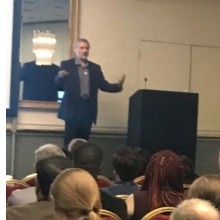
May 2018 in London, at the National Software Testing Conference 2016, I presented a talk entitled “How To Survive Agile and DevOps - A Test Management Guide”

30 - 35 minutes to provide information so that people in Senior Testing Roles, know how they can continue to add value in Agile and Dev Ops projects - despite many people saying that there is no need for their roles.
TLDR; If you self-host a Wordpress site, make sure you can restore from backups and check your site using wpscan and other tools regularly.

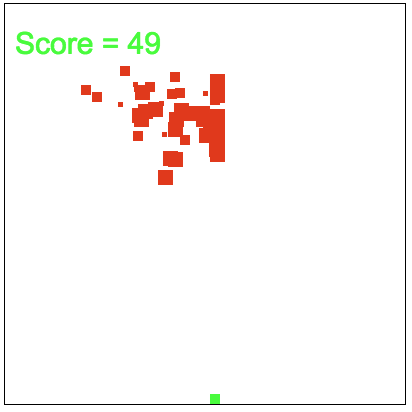
TLDR; Some games are not meant to be played, they are meant to be played with.
I recently released “Protect The Square”, which according to my version control system I wrote on 2nd May 2016. I had forgotten about it.
I found it again a few days ago and decided to release it as the technical exploration exercise it was intended for.

TLDR; Reverse counterstrings are easier to generate. Creating same output forward is harder but might be useful for streaming or files.
TLDR: Learn one programming language and you have already learned parts of other languages. You can speed up learning other languages by learning the differences.
I wrote a bunch of code in Java in my Test Tool Hub for generating CounterStrings.
I thought it would be useful to have it online and written in JavaScript.
TLDR; Too many scope and reporting restrictions on testing attenuates both noise and signal.