Software Testing and Development Blog Posts
Subscribe to the full blog feed using RSS
Subscribe to the full blog feed using RSS
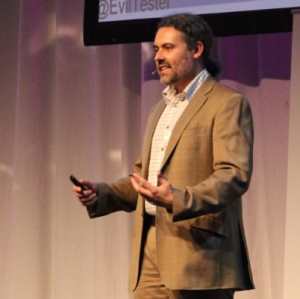
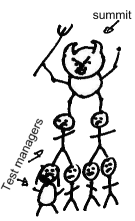
I facilitated a session on free and open source test tools at the Test Management Summit. This post contains an edited form of my notes prior to the event and some amendments and additions based on the discussion from the session.
I have coded and designed commercial, free and open-source testing tools. I have used open source, free and commercial test tools. I try to keep up to date with the available open-source and free test tools - less so with the commercial tools (for reasons that I will explain later). I do not claim expertise with all the tools but my well honed sin of avarice leads me to continually seek out, download, ‘own’ and ‘use’ the tools. Giving me the ability to talk, seemingly, knowledgeably about the tools.
Some notes on how I evolved my exploratory testing documentation approach.

TLDR; The learning experience that Steve Martin describes relates fairly well to many jobs, many of us don’t go the extra mile that Steve Martin attributes to his success.

Agile gets everywhere and it is not easy. It takes time. It takes practice. What will a tester do?
Back in 2001? 2002? Back whenever I noticed the ISEB certification starting, I thought “Hmm… how strange, I wonder why they would want to do this”.
I read an early draft of the syllabus online and thought “Well this seems fairly simple, but misses out a lot of stuff that I do in the real world, but what harm could it cause?”
What testing books should I read?" such a hard question to answer in a land where a testing book that has value at one point in your career ceases to have value later on.
I do have some books that I recommend to testers, entirely ignoring their context.

Any curious tester can find a number of published heuristic documents out there on the web and in blog posts. In this post I aim to show you an easy way of identifying new test ideas without recourse to heuristics, on a case by case basis, to allow you to add further depth to your own test explorations.
Some notes on Brief Counselling and Therapy approaches applied to Software Testing.
A little history… As I did my best to teach a tester how to write test ideas for an Agile story I found myself wondering why I found coming up with ideas and questions a fairly easy activity and why they seemed not to find it quite so easy. Practice would have had something to do with it, but I also suspected a slightly different mental model.